Santa Barbara Museum of Art  
 
home > exhibitions > archive:
     

2002 Exhibitions

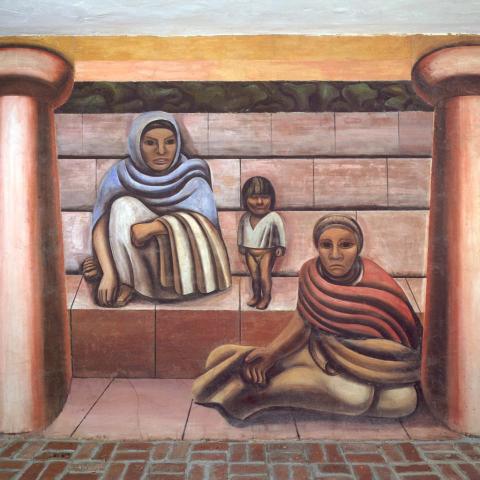
 Portrait of Mexico Today, 1932
Opened October 20, 2002


For more information on this exhibition and permanent installation, click here.

Ruth Harriet Louise and Hollywood Glamour Photography
May 11 - October 6, 2002

Santa Barbara's Own: Edward Borein
May 11 - November 10, 2002

9.11.01
The Day that Changed the World
June 27 - July 7, 2002

The Santa Barbara Museum of Art and Northern Trust together present a special ten-day exhibition of more than 140 photographs that chronicle the events of September 11, 2001. On view June 27 through July 7, these poignant images pay moving tribute to those who lost their lives in the attack; at the same time they celebrate the dedication of everyday heroes who participated in the rescue and recovery effort. Compiled by NewsCom, the photographs featured in 9.11.01: The Day that Changed the World are taken by professional photographers who found themselves at risk as they captured on film the mass destruction that struck Manhattan, the Pentagon, and the countryside of Pennsylvania.

Craig A. Madsen, president of the Santa Barbara region for Northern Trust, reflects: "This special collection is tastefully done considering the heart-rending subject portrayed. In one sense, it is a memorial, which allows people to reconcile the events of September 11 as they choose. We expect viewing it will be an emotional experience for many people, in the same way it would be visiting any of the war memorials dedicated to the men and women who lost their lives fighting for the freedom of our country."

The traveling exhibition is being featured at schools, firehouses, police stations, museums and select Northern Trust locations across the country throughout 2002. In addition to 9.11.01: The Day that Changed the World, the Santa Barbara Museum of Art will feature a special day of remembrance on Sunday, June 30. Local poets will give memorial readings in the exhibition from 12 - 5 pm. Also, Santa Barbara firefighter Howard Orr and his search-and-rescue trained dog Duke, who worked together at Ground Zero, will give a presentation at 1:30 pm in the Museum's Mary Craig Auditorium.

The exhibition will be on view for 10 days. The SBMA offers free admission to the community to see the exhibition on Thursday June 27 and July 4 and on Sunday, July 7. As part of its commitment to aid in recovery from the September 11 disaster, The Northern Trust Company has donated more than $800,000 to the September 11th Fund, a joint project of United Way of New York City and The New York Community Trust. The donation includes money contributed by Northern Trust employees and a matching amount by the company.


Impressions of New York: Colin Campbell Cooper
March 23 - July 7

Capturing the changing face of New York City in the first decade of the twentieth century, the 17 paintings and drawings in the exhibition provide an intimate look at Cooper's impressionist New York scenes. A full color catalogue accompanies the exhibition.

"It is timely, significant, and poignant that this exhibition take place in the wake of the tragedy that has drastically affected the people of our nation as well as arguably the most recognized skyline in the world," said exhibition curator Marshall Price. "Architecturally, the effect has been and will continue to be for sometime, a general reassessment of the architecture of the skyscraper. Impressions of New York offers a nostalgic look not only at Cooper’s earliest acclaimed work, but also at the time when skyscrapers, new marvels of engineering, were recognized by few for their aesthetic qualities."


Desire and Devotion: Art from India, Nepal and Tibet
March 2 - June 2, 2002

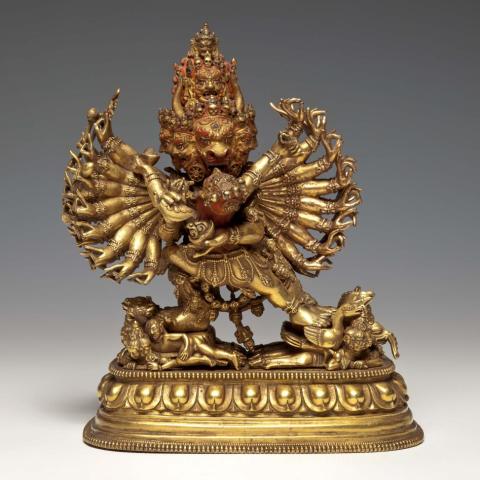
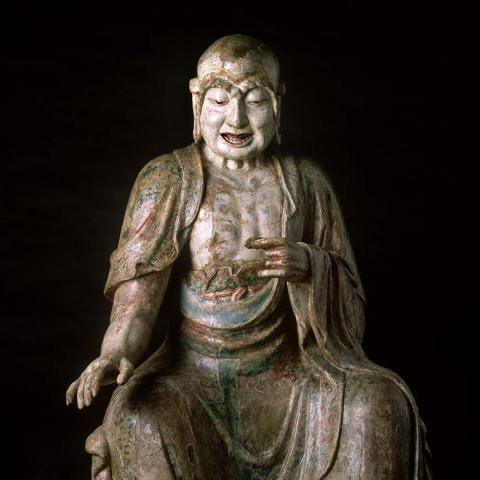
The collection of John and Berthe Ford is one of the most important private holdings of Indian and Himalayan art in the world. Certain objects have been widely exhibited, such as the "Green Tara", a painting executed in India around 1100 for a Tibetan patron and recognized as both a masterpiece and a cornerstone for the study of Tibetan painting. Other works have never been publicly shown. This exhibition brings together works from both India and the Himalayas, demonstrating the range and depth of the Ford collection; it provides an extraordinary overview of 2,000 years of history and illustrates the enduring themes in the art of southern Asia.

Chronologically and geographically, the exhibition of 150 objects falls into three chief divisions. First, Indian sculpture in clay, stone, metal, and wood, dating from the 3rd century BC to the 17th century AD (33 works). Secondly, 10th- to 19th-century Himalayan metal sculpture and paintings (51 works from Tibet and 26 from Nepal). The final section consists of Indian miniature painting from the 17th to 19th centuries (40 works). With few exceptions, the objects are either Hindu or Buddhist.

The exhibition is held together by certain recurring topics or themes, chiefly having to do with the human body. Systems of ideal beauty, based on fixed proportions and characteristic attributes, were established early and have remained constant for centuries. The gods are depicted with perfected bodies. Sculptures and pictures of both humans and deities also express sentiments such as serenity, anger and desire. These sentiments are the outward manifestations of internal mental processes that are directed toward a supreme end: Serenity represents an enlightened mind; anger represents the mind's battle with evil; and desire represents the mind's engagement with philosophical perfection. These themes will be discussed in the catalogue, wall texts, and labels.

Dr. Pratapaditya Pal, former curator of Indian and Southeast Asian art at LACMA and now consulting curator for Chicago Art Institute and the Norton Simon Museum, will be the principal author of the catalogue.


Copyright © 2010 Santa Barbara Museum of Art. No images or information may be reproduced,transmitted or copied without permission.