 |
|
2006 Exhibitions
 |
Artists at Continent's End: The Monterey Peninsula Art Colony, 1875-1907
October 21, 2006 - January 21, 2007
Included in this exhibition are some 70 paintings, photographs, and works on paper drawn from museums and private collections throughout California and beyond. It features artists of major importance to California’s, and America’s, art history - including Jules Tavernier, William Keith, Evelyn McCormick, and photographer Arnold Genthe – as well as other artists, both well- and little-known, who each contributed to the reputation of what is now widely recognized as one of America’s most important art colonies.
Few regions rival the magnificence of California’s Monterey Peninsula. In the late 19th century, the beauty of the landscape, together with a mild climate, rich history, and simplicity of lifestyle, attracted artists of all disciplines. Whereas previous accounts date the establishment of the Monterey Peninsula colony just after the 1906 San Francisco earthquake, this groundbreaking exhibition reveals that the Monterey Peninsula was a gathering place for artists well before 1906. These kindred spirits shared their ideals and respective arts as they crafted a defining style of California art.
Artists of the Monterey Peninsula worked in three major styles: French Barbizon, Tonalism and Impressionism. Beginning with Jules Tavernier’s arrival in 1875, art produced in the area signaled a move away from the strict description of nature toward a more subjective, meditative and harmoniously simple approach. By the turn of the century, the majority of artists in the region had arrived at a deeply personal, tonal style, featuring close-value colors and moody atmospheric effects.
Organized by the Crocker Art Museum, Sacramento, CA.
In Santa Barbara, this exhibition has been made possible in part through the generous support of Kathleen Barrows, The Cheeryble Foundation, The Schultz Foundation in memory of George L. Schultz, and Santa Barbara Bank & Trust.
|
| |
|
 |
Lost and Found: Japanese American Photographs from the Dennis Reed Collection (Part I)
August 12 - October 15, 2006
and
Lost and Found: California Pictorialist Photographs from the Dennis Reed Collection (Part II)
October 21, 2006 - January 7, 2007
Lost and Found represents a two-part exhibition of 60 vintage prints from the Dennis Reed Collection and features works gathered during some 25 years of research and drawn from a selection of nearly 700 prints. The first installation of the exhibition, Lost and Found: Japanese American Photographs from the Dennis Reed Collection, provided a rare glimpse of 30 photographs by a group of Japanese Americans who worked during the 1920s and 1930s before they were interned in relocation centers during WWII.
The second part, Lost and Found: California Pictorialist Photographs from the Dennis Reed Collection, focuses on those photographers involved in California’s Camera Clubs, including Los Angeles Camera Club, the Camera Pictorialists, the Pictorial Photographic Society of San Francisco, and the California Camera Club.
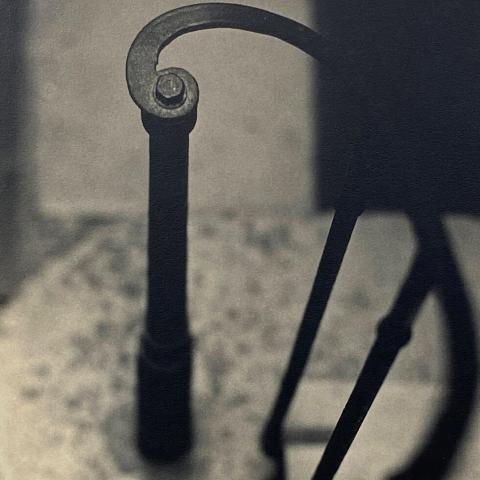
Both exhibitions showcase the photographic movement of Pictorialism that was in vogue from around 1885 through the early years of the 20th century, and declined rapidly after 1914. Pictorialism is a photographic term used to describe images that emphasize the artistic quality of the photograph rather than the scene it depicted, with the primary aim of bringing photography into the fine art realm. Among the distinguishing characteristics of the movement are soft focus, special filters and lens coatings, heavy manipulation in the darkroom, and exotic printing processes.
This movement began its decline as photographers and critics in the 1920s began to embrace a more modernist approach to photographic practice. As such, Pictorialism came to be seen as outdated and even chastised for its embrace of these idealized notions of photography. The trend evolved to an appreciation of more urban, industrial and technological subjects, and a utilization of pure photographic vision through control of perspective and sharp focus.
Enter collector Dennis Reed – who searched for and saved the Pictorialist photographs that fell out of professional and public popularity. In the case of the first installation, Lost and Found: Japanese American Photographs from the Dennis Reed Collection, many of the Japanese-American photographers were sent to relocation camps during World War II, and in some cases lost their life’s work - or their lives - leaving work in the hands of families or friends who had little knowledge of its significance in photographic history. Through dedicated and arduous research, Reed located six photographers, and with their help, began to gather material to create a context for his collection and preserve the legacy of these important and under-recognized photographers.
Reed’s research has been no less thorough or enthusiastic as he looked to the “unlovables”, the basis for the second installment Lost and Found: California Pictorialist Photographs from the Dennis Reed Collection. Precisely because these photographers were considered unfashionable and largely ignored in the marketplace after the height of the art of Pictorialism, Reed began to search for their work that had been featured in periodicals of the day.
This exhibition has been generously sponsored by Kathleen Barrows.
|
| |
|
 |
Alice Burr: A California Pictorialist Rediscovered
October 21, 2006 - January 7, 2007
This exhibition, organized in conjunction with the artist’s family, features approximately 27 prints drawn from the strongest known works of Alice Burr’s career from about 1920-1925. Independent, and oriented toward the artistic development that later led to her painting, printmaking, and film, Alice Burr worked as a Pictorialist photographer for only a relatively brief time. This exhibition provides the opportunity to view rare photographs that have been known only to her family and a handful of curators and friends.
The artistic legacy of Alice Burr, as evidenced by this exhibition, represents the most public facet of her creative life. But her role as a daughter, sister, cousin, and aunt in a remarkable family, and her challenges as a single woman pursuing an artistic career in turn-of-the-century San Francisco, also deserve recognition.
Alice’s photography provides a natural extension of this propensity to capture the details of travel and home. Her work in silver and pigment prints, autochrome, and other media, while characteristic of the time, is exceptional, but also displays a distinct artistic personality - the embodiment of the pictorialism style.
The present exhibition celebrates the role of Jeanne Slate Overstreet and her late husband Alan Burr Overstreet, Alice Burr’s nephew, who together saved many Burr family papers and photographs. More recently, Mrs. Overstreet supported the considerable work necessary to bring this little known California Pictorialist photographer to the attention of the public once again. It is the fifth in a series of showings of the artist's work on both the east and west coasts.
The exhibition has been organized, and the catalogue written, by independent curator Thomas Weston Fels, and has been generously sponsored by Kathleen Barrows.
|
| |
|
 |
Master Drawings from the Santa Barbara Museum of Art
July 15 - October 8, 2006
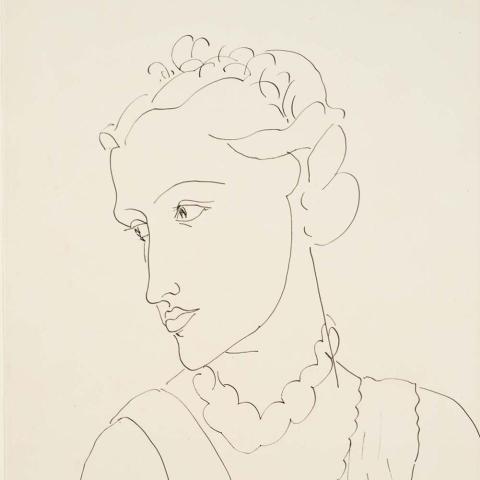
This second installment in a series of European drawing exhibitions is curated by Dr. Alfred Moir and showcases 25 distinguished European works from the early 16th century to the 20th century included in SBMA’s permanent drawing collection. The exhibition highlights many of the Museum's most important drawings, including those of exceptional rarity and historical significance. All of the drawings, whether by artists as famous as Picasso and Degas or as obscure as Spada and De Morgan, are highly skilled. Put simply, these drawings are “la crème de la crème” by unquestionable masters!
|
| |
|
.jpg) |
Between Past and Future: New Photography and Video from China
July 1 - September 17, 2006
Representing the only California venue, this groundbreaking exhibition is the first comprehensive look at the innovative photo and video art produced since the mid-1990s from China. A portion of the exhibition will be presented simultaneously at the Contemporary Arts Forum from July 1 through August 26.
Featuring 130 works by 60 Chinese artists, many of whom are exhibiting for the first time in the United States, the exhibition reflects the enthusiastic adoption of media-based art by younger Chinese artists. Their works, often ambitious in scale and experimental in nature, reflect a range of highly individual responses to the unprecedented changes now taking place in China’s economy, society and culture. In addition to introducing a remarkable body of work to American audiences, the exhibition will also provide insights into the dynamics of Chinese culture at the start of the 21st century.
The significance of the subject matter is only matched by the considerable scope of the exhibition which includes not only photographs, but also video and installation pieces that amplify the exhibition’s four main themes: History and Memory, Reimagining the Body, People and Place, and Performing the Self (at Santa Barbara Contemporary Arts Forum).
The exhibition is organized by the International Center of Photography, New York, and the David and Alfred Smart Museum of Art, University of Chicago, in collaboration with the Asia Society New York and the Museum of Contemporary Art, Chicago with support from the Smart Family Foundation.
In Santa Barbara, this exhibition has been made possible through the generous support of Stephanie and Fred Shuman, with additional support from the Management Companies of the Archstone Partnerships, the Wallis Foundation, Charles and Mildred Bloom Fund, PhotoFutures, Jill and John C. Bishop, Jr., and Julie and Bruce G. Wilcox.
|
| |
|
 |
Behind the Scenes with Drawings: Renaissance to Rococo
April 29 - July 9, 2006
The first of a series of European drawing exhibitions, curated by SBMA Consulting Curator of European Drawings, Dr. Alfred Moir, Behind the Scenes with Drawings: Renaissance to Rococo showcases selected drawings from the collections of the Santa Barbara Museum of Art and a local private collector. While none of the 21 individual works included in this show was made specifically for any one of the splendid works in the Renaissance to Rococo exhibition, on view through May 28, each, in some way, relates to one or several of the paintings – by style, artist, or subject or theme. The purpose of the exhibition is to emphasize the importance of the role of drawing in the process of making paintings, and also to confirm the appeal that this medium has on its own.
All of the drawings, rich in line, form and nuance, affirm the status of this medium in the history of art and also the uniqueness of its quality. Drawings are quite different from paintings. They are usually smaller, monochromatic, and fragmentary. They are more easily portable but tend to be more sensitive to abuse by dirty fingers, scissors, spilled liquids, mold, and the like. Light can also be destructive of drawings, making their inclusion in exhibitions rare.
Before the invention of photography in the mid-nineteenth century, drawings were essential to the process of creating a painting. Art students began their basic training by learning to draw. They continued to draw to perfect their skill throughout their careers. When artists made paintings, they would assemble multiple relevant sketches and work from there to create a detailed composition. The design was then presented to patrons, with the hope of gaining the support necessary to produce a finished painting.
Because drawings were considered only as ancillary to the process of making paintings, they were not often preserved and were rarely signed and dated. With a few very notable exceptions, collectors did not begin to acquire drawings until the 18th century. And only recently have drawings attracted substantial interest from collectors and museums.
Dr. Alfred Moir, longtime art historian and collector of old master drawings, is one of the few with such an interest in this important medium. “I had acquired my first works of art in 1948 on my initial trip to Europe. But by 1970 it was becoming increasingly difficult to find any painting that was both within my means and up to the standards of quality that I’d learned. Old master drawings were still relatively inexpensive and very much to my liking.” Because of their rarity and importance in the art world, these drawings have since become prized collectables.
|
| |
|
 |
Taking Root: A Century of Migrant Workers in California
April 22 - August 6, 2006
Part of a unique collaborative effort between the Santa Barbara County Arts Commission, the Santa Barbara News-Press, and the Santa Barbara Museum of Art, Taking Root: A Century of Migrant Workers in California traces the history of one of our state’s most valuable resources – the laborer. On view at SBMA are approximately 25 vintage prints by photographers from the 1930s to 1970s, spanning the time of the Works Progress and Farm Securities Administrations, Life and Look magazines, and images of Cesar Chavez’s legendary march to Sacramento. Serving as counterpoint at Channing Peake Gallery is the exhibition The New Okies, a photographic essay that pays tribute to the immigrant strawberry pickers of Santa Maria utilizing a comparative mix of historical images on loan from the Santa Barbara County Arts Commission, and contemporary photographs by Santa Barbara News-Press photographers made possible by a grant from the California Council for the Humanities. Both exhibitions will be on view simultaneously beginning May 15 in order to encourage visitors to make contrasts and comparisons between the historical and present-day California laborer.
The SBMA exhibition, Taking Root, represents early documentation of farm labor, a significant part of the documentary photographic tradition in the United States. Many of the renowned photographers of the 1930s and 1940s, including Dorothea Lange and Marion Post Wolcott, were retained by government agencies to document the farm workers’ rural and small-town living and working conditions, and the progress of programs established to improve these conditions.
The result provided not only pictorial validation of the need for such programs, but also an intimate look at the lives of people, including their culture, their union organizing activity, and their labor leaders. From the extreme working conditions illustrated by Marion Post Wolcott’s Untitled (Children drinking water in a field) and Dorothea Lange’s Roadside Ranch Camp, 1936, to the conflict posed in Hansel Mieth’s, Sheriff and Deputized Farmers, Salinas Lettuce Strike, 1936, to the tender moments of family life, depicted by Pirkle Jones’ Farm Worker Family, Bakersfield, CA, 1957, Taking Root engages the viewer on emotional, political and socioeconomic levels and reveals both aesthetic and social significance in the roots of American photography.
The Taking Root exhibition has been made possible by The Dana and Albert R. Broccoli Foundation and the Wallis Foundation, with additional support from Susan and Donald Bowey.
|
| |
|
 |
Renaissance to Rococo: Masterpieces from the Collection of the Wadsworth Atheneum Museum of Art
February 11 - May 29, 2006
Representing its first journey away from the Wadsworth Atheneum Museum of Art in Hartford, CT, a prestigious collection of European paintings spanning the 15th through the 18th centuries will make a temporary “home away from home” in Santa Barbara.
Internationally renowned for its quality, rarity, and beauty, the Wadsworth Atheneum Museum of Art collection is in great demand by museums the world over. Historically, the Wadsworth Atheneum has loaned individual old master paintings to major exhibitions, but in 2004, the museum did what it has never done before, by sending 60 of its best paintings on the road.
The Santa Barbara Museum of Art represents the final destination of a two-year tour. It is the only western states venue of this impressive group of works from Italy, Spain, France, Holland, and England, all of which have not been shown together for several years. The paintings represent glorious examples of portraiture, still life and landscapes, and glimpses of everyday life of long ago, allegories, and lessons in morals. Other paintings recount stories from Greek and Roman mythology, the Old and New Testaments, medieval legend and poetry, and the fabled lives of the saints.
The earliest painting is Piero di Cosimo’s large yet delicately detailed The Finding of Vulcan on the Island of Lemnos, dating from 1490, a rare work by this Renaissance master.
The Baroque is represented by some of the most celebrated and well-known paintings and artists, including Michelangelo Merisi da Caravaggio’s The Ecstasy of Saint Francis, dating from 1594-95. Caravaggio is one of the most important and revolutionary artists in the western canon. He reinvented religious painting, using ordinary people as models and light as an instrument of drama and emotion.
Also included are notable works by Dutch and Flemish artists of the era such as Michael Sweerts’s dewy-eyed Boy with a Hat, from 1655-1660, and Frans Hals’ Portrait of Joseph Coymans, from 1644, a fine example of the painter’s virtuosity.
The exhibition culminates in a blaze of rococo splendor with Giovanni Domenico Tiepolo’s The Building of the Trojan Horse, from 1773-74, Canaletto’s The Square of Saint Mark's and the Piazetta, Venice, from 1731, Francisco Goya’s Gossiping Women, from 1792-96, and Giovanni Paolo Panini’s Interior of a Picture Gallery with the Collection of Cardinal Silvio Valenti Gonzaga, from 1749. In the latter, the setting is an architectural fantasy, but the more than 100 paintings were real, and all were owned by the art collecting cardinal.
Renaissance to Rococo introduces people to the outstanding but little-known old master painting collection of the Wadsworth Atheneum, one of the best in the U.S. Established in 1842, the Wadsworth Atheneum is America’s oldest public art museum, preceding the founding of the Metropolitan Museum of Art in New York and the Museum of Fine Arts in Boston by three decades. Initially known for its decorative arts objects that came primarily from the bequest of J. P. Morgan, the paintings were purchased individually beginning in 1928. This was made possible by the large legacy of the Sumner family, which came to the museum in 1927, as did the energetic director A. Everett “Chick” Austin, Jr. He launched the Atheneum on a path of creating one of the major collections of old master paintings in America, with a particular emphasis on the Baroque period. Austin's successor, Charles C. Cunningham added substantially to this legacy with various important acquisitions.
Renaissance to Rococo: Masterpieces from the Collection of the Wadsworth Atheneum Museum of Art has been organized by the Wadsworth Atheneum Museum of Art, Hartford, CT.
This exhibition in Santa Barbara has been made possible by the generous patronage of Lady Leslie Ridley-Tree.
|
| |
|
|
%20angle%20web225.jpg)
|
Masterpieces of Chinese Lacquer from the Mike Healy Collection
January 14 - April 16, 2006
Spanning a period of almost 2,000 years from the Han (206 BCE – 220 CE) to Ming (1364-1644) dynasties, this exhibition presents 31 works from the exceptional Mike Healy Collection. Objects in the exhibition include intricately carved examples of cosmetic boxes, wine cups, plates and table screens, with all of the pieces being shown in the western continental United States for the first time. They made only one earlier appearance in New York at the China Institute Gallery in late 2005.
Lacquer art has a long history in China, with archaeological evidence dating back to Neolithic times (10,000-2,000 BCE). The richness of the color and the extraordinary craftsmanship necessary to create lacquer ware made it a luxury item treasured by the Chinese Imperial families and upper class.
The techniques include painted, carved, and several types of inlaid lacquer, with each developed over many hundreds of years and evolved according to use, interest, taste, and patronage. After the tenth century, the techniques of qiangjin (engraved gold) and diaotian (filled in) were most popular. The lacquers of later periods, from the 14th century onwards, are mostly diaoqi, or carved, a technique considered a uniquely Chinese achievement and lacquer art in its pure form.
Lacquer ware is created by using lacquer, a natural product that comes from the sap of a particular tree (Rhus verniciflua) that is native to and grows wild in China. It is also a cousin to and shares characteristics with Toxicodendron diversilobum, or more commonly known as poison oak. It is naturally a creamy grey color but changes to a brownish black when exposed to light. The lacquer must be infused with ash for stabilization, and a variety of materials are used to color the lacquer. Cinnabar, an ore of mercury mined in the provinces of Guizhou and Henan, is used for the red color; iron oxide for the black; and orpiment, an arsenic trisulfide mineral, for yellow. The substructure for lacquer ware consists of a very thin wood core that may be reinforced with fabric and sometimes is primed with lacquer and clay.
In the case of carved lacquers it often took several hundred layers of the thin coating (between 3 and 5 mm) to achieve sufficient depth for carving. Each layer of lacquer is allowed to dry and then burnished before another layer is applied. This time-consuming process could involve several years of work, and given that raw lacquer is toxic and extremely difficult to work with, it is not surprising that lacquer became the cherished possession of the upper class.
Birds, animals, fruit and flowers are frequent themes in lacquer ware; one of the most elegant objects in the collection is a round red box covered with carved peony blossoms in full bloom. A plate in the collection depicts a chrysanthemum pattern that is identical to that on a circular box in Beijing's Palace Museum.
Among the highlights in the exhibition are two early Han dynasty 1st century CE pieces: a cosmetic box and a red wine cup with two handles. Lacquer was so popular in the Han dynasty that it was used for everything from utensils, containers for food, wine and cosmetics to numerous tomb objects.
Lacquer inlaid with mother-of-pearl, or luodian, was developed during the Song dynasty (960-1279). Today, few examples from this period survive since they are extremely sensitive to temperature changes and as a result, are difficult to preserve. The Healy collection has five pieces of luodian from the Yuan and Ming dynasties.
The influence of Chinese lacquer spread to neighboring countries, especially Japan and Korea. "Some of the finest lacquer items in the Healy collection arrived via Japanese collections, and some of the storage boxes, which are of Japanese origin and bear inscriptions indicating Japanese ownership, still remain with the lacquers," notes Stephen Little, Director of the Honolulu Academy of the Arts, in the full-color catalog that accompanies the exhibition.
Modern lacquerware from Japan and Korea is highly finished in appearance when compared to that still produced in China and other parts of Southeast Asia. Today, lacquerware items remain important in most East and Southeast Asian households, although they tend to be more expensive than either ceramics or plastic.
The exhibition is organized by the Honolulu Academy of Arts. The presentation at Santa Barbara, representing its only western continental states venue, has been made possible through the generous support of Timothy Walsh and Susie and Hubert Vos.
|
|
|
|