THE SEARCH
The Santa Barbara Museum of Art (SBMA) seeks a strategic, collaborative, and mission-driven financial leader to serve as its next Chief Financial Officer (CFO). Partnering closely with the Director/CEO, Board of Trustees, and the executive leadership team, the CFO will thoughtfully steward SBMA’s resources to realize its mission of “integrating art into the lives of people” through strategic financial counsel and operations. This is an exceptional opportunity to guide one of California’s distinguished cultural institutions.
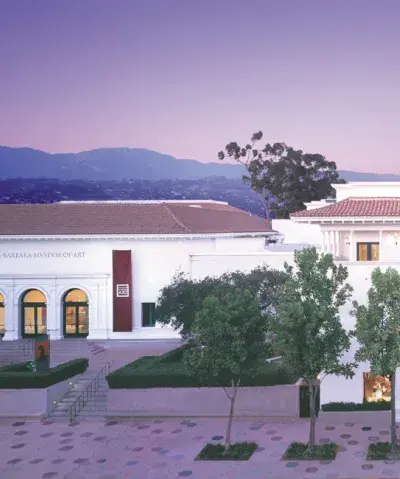
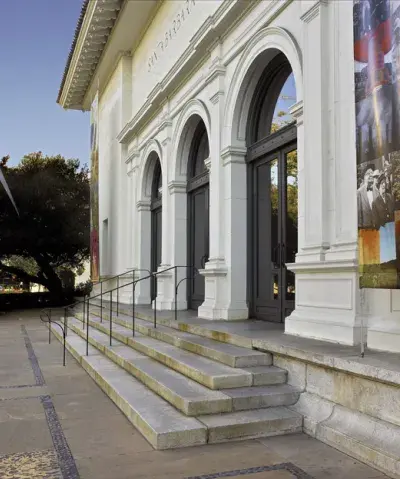
SBMA opened to the public in 1941 in the former Post Office (1912 – 1932) through the immense generosity of dedicated collectors who assembled an important collection of over 25,000 works of art spanning over 5,000 years of human creativity. The SBMA offers acclaimed programming, touring exhibitions worldwide, renowned exhibitions, and a wide array of educational and interpretive programs. In a city of approximately 89,000 residents, SBMA draws an audience of approximately 65,000 annual visitors to its 60,000 square feet located in the heart of downtown Santa Barbara.
Reporting directly to Director and Chief Executive Officer Amada Cruz, the CFO will join the Museum at an opportune time. The institution benefits from an engaged Board of Trustees, strong artistic assets, and ambitious leadership. The CFO will help steward the Museum as it embarks on its next capital campaign and new phase of growth. The CFO will play a central role in translating its aspirations into sustainable and actionable financial and operational planning and execution.
SBMA seeks a CFO who combines the financial sophistication of an experienced executive with the collaborative style and mission orientation required within a nonprofit cultural institution. The successful candidate will bring substantial senior-level financial leadership experience within a nonprofit organization, sophisticated knowledge of nonprofit and fund accounting, and outstanding analytical and communication skills. They will have strong judgment and integrity, comfort with ambiguity, experience operating at both strategic and tactical levels, and a genuine interest in the role that art and cultural institutions play in civic life.
CURRENT CONTEXT
Following the completion of a transformative $50 million renovation, SBMA is entering an exciting new chapter under Director/CEO Amada Cruz, expanding its contemporary and globally engaged artistic programming while deepening its role as an accessible, welcoming cultural and educational resource for the Santa Barbara community. Since joining SBMA in 2023, Cruz has advanced an ambitious vision for the Museum by reimagining its galleries and collection presentation, strengthening its contemporary art program and acquisitions, expanding education and community engagement through the new Art Learning Lab, and broadening access through initiatives including bilingual interpretation and free programming. As SBMA builds upon this momentum, the Museum is balancing ambitious artistic, educational, and community-facing priorities with a continued commitment to thoughtful stewardship of its collections, resources, and institutional assets. The next chapter offers an opportunity to prepare for a new capital campaign, work with a highly collaborative leadership team, and strengthen the planning, reporting, systems, policies, processes, workflows, and organizational infrastructure necessary to support the Museum’s ambitions.
To read more about the history, collections, and impact of SBMA, see the Appendix to this document.
ROLE OF THE CHIEF FINANCIAL OFFICER
The CFO will serve as the Museum’s senior financial executive, a key member of the senior executive team, and a trusted strategic partner to the Director/CEO and Board of Trustees. The CFO will provide strategic analysis and sound judgment to inform institutional decision-making while leading and executing the full range of financial responsibilities, including budgeting and forecasting, financial reporting and planning, audit management, and highly collaborative investment and debt management.
The CFO will also:
- Direct all accounting and financial operations in accordance with GAAP and nonprofit accounting standards.
- Ensure appropriate stewardship and reporting for restricted contributions, grants, endowment and quasi-endowment funds, board-designated funds, art acquisition funds, and other designated resources.
- Oversee the general ledger, accounts payable, accounts receivable, cash management, reconciliations, revenue recognition, contribution accounting, fixed assets, and related financial functions.
- Oversee treasury functions, including cash-flow planning, liquidity management, reserves, banking relationships, and implementation of Board-approved investment and spending policies.
- Lead the annual audit process and oversee compliance with applicable nonprofit reporting, tax, regulatory, grant, and governmental requirements.
- The effective application of Blackbaud financial software and reporting systems, including Financial Edge NXT and related tools.
The CFO will work closely with the Board of Trustees and external auditors, tax advisors, bankers, legal counsel, and investment advisors while ensuring strong internal controls, timely and accurate reporting, and compliance with nonprofit accounting and regulatory requirements. The CFO will serve as a primary financial resource to the finance, investment, and audit committees of the Board, and other appropriate committees.
The CFO’s team includes the Directors of Security and Information Technology, a finance manager, and an accounting assistant. The CFO will provide leadership to several critical institutional operating functions by overseeing the Museum’s Security and Information Technology operations, ensuring that financial, technological, physical-security, business-continuity, and enterprise-risk priorities are well coordinated and support the Museum’s mission and strategic objectives. The CFO provides executive oversight of the Museum’s security operations and technology strategy and infrastructure while relying upon the Directors for technical and operational leadership.
The CFO role requires a leader capable of translating complex financial information into meaningful analysis for staff leadership and the Board, strengthening financial systems and controls, developing short- and long-range financial models, and ensuring that the Museum’s resources are managed with the highest standards of accountability and stewardship. The CFO will be a hands-on leader who is energized by building, making financial information accessible and actionable, and developing and supporting a lean, service-oriented team. The CFO will move comfortably between Board-level strategy, multi-year modeling, and the practical realities of day-to-day operations while helping to position SBMA for long-term sustainability and future growth.
KEY OPPORTUNITIES AND CHALLENGES FOR THE CHIEF FINANCIAL OFFICER
The CFO will have the opportunity to collaborate with a highly dedicated executive leadership team and Board committed to the CFO’s and Museum’s success. It will be a truly team effort to achieve common goals, with the CFO responsible for the following opportunities and challenges:
Partner strategically with the Director/CEO, Board, and executive leadership team
- Serve as the principal advisor to the Director/CEO and Board regarding financial strategy, fiscal sustainability, and financial risk to ensure resources are aligned with institutional priorities.
- Participate actively in organizational strategy, policy development, long-range planning, and major institutional decisions as a member of the executive leadership team.
- Maintain a solid understanding of the Museum’s operating model to evaluate the financial implications of new initiatives, programs, exhibitions, capital projects, staffing decisions, and other significant institutional investments.
- Ensure finance, technology, security, programs, development, human resources, and operations work strategically and effectively together in support of the Museum’s mission.
- Communicate complex financial matters in a manner that is accessible and actionable for both financial and non-financial audiences.
- Exercise sound judgment regarding when to lead, when to advise, and when to create space for others’ expertise and perspectives.
Build a solid financial foundation
- Establish sophisticated financial analysis, tools, forecasts, dashboards, key performance indicators, metrics, and recommendations for timely executive and Board decision-making.
- Build upon current tools for improved financial reporting and modeling to steward planning, financial literacy, accountability, and responsible fiscal management across the Museum.
- Ensure data integrity and identify and execute opportunities to improve systems, policies, tools, processes, automation, and workflows for best practices and increased efficiencies.
- Mature financial operations and systems for solid accounting and reporting functions.
- Maintain strong relationships with external auditors, tax advisors, legal counsel, bankers, investment advisors, and other professional partners.
- Make key investments in technology and security for improved effectiveness and to mitigate risk.
- Serve as an effective manager who recruits and develops talented professionals, ensures accountability, builds community, celebrates shared successes, determines the appropriate organizational infrastructure for success, and focuses on effective oversight focused on strategy, leveraging the expertise of the team for day-to-day operations.
Position the Museum for future investment and long-term financial sustainability
- Support financial planning and stewardship associated with future fundraising and capital expansion efforts, major gifts, and planned-giving vehicles.
- Lead annual budgeting and performance monitoring to identify emerging trends, risks, opportunities, and significant variances to pivot short- and long-term financial priorities.
- Develop and maintain multi-year financial projections, scenario analyses, and models supporting strategic, capital, and institutional planning.
- Monitor the Museum’s investment and debt portfolios and work closely with the finance and investment committees and external investment advisors to implement strategy.
- Provide the analytical discipline to adapt planning regularly in response to changing markets.
- Provide appropriate oversight of enterprise risk, insurance, and business-continuity considerations as part of a comprehensive approach to long-term institutional stewardship.
QUALIFICATIONS AND CHARACTERISTICS
The successful candidate will possess many, if not all, of the following professional skills and experiences:
- Bachelor’s degree in Accounting, Finance, Business Administration, or a closely related discipline required. CPA and/or MBA, MPA, or other relevant advanced degree preferred.
- Ten or more years of progressively responsible financial and accounting experience.
- Five or more years of significant senior financial leadership and supervisory responsibility.
- Genuine commitment to SBMA’s mission and appreciation for the role of art, education, and cultural institutions in community life.
- Experience improving financial systems, processes, reporting, data integrity, controls, and appropriate automation. Hands-on experience with general ledger systems is critical. Experience with Blackbaud Financial Edge NXT is advantageous but not required.
- Deep understanding of nonprofit accounting operations and financial management, including accounts payable, accounts receivable, financial planning and analysis, budgeting, forecasting, and the recurring rhythms of the finance function, including month-end and year-end close, annual audit processes, and Form 990 preparation.
- Experience with capital projects, fundraising campaigns, major grants, planned giving, complex restricted funding, and/or nonprofit investment structures.
- Strong command of nonprofit and fund accounting, including restricted and unrestricted contributions, endowments, grants, and board-designated resources. Experience with art acquisition funds or similar fund planning is helpful.
- Experience preparing and presenting clear, sophisticated financial information to executive leaders, boards, and finance, audit, and investment committees, with the ability to make complex matters understandable to non-financial audiences.
- Strong knowledge of GAAP and nonprofit financial-reporting requirements, with demonstrated experience in budgeting, forecasting, financial analysis, audit preparation, tax and regulatory compliance, cash management, financial reporting, and internal controls.
- Experience developing multi-year financial projections and models that support organizational strategy, programs, fundraising, staffing, capital priorities, and long-term sustainability.
- Demonstrated success leading and developing staff, clarifying roles and expectations, strengthening accountability, and building a capable and service-oriented finance function.
- Exposure to monitoring investments and endowment assets and supporting treasury, liquidity, reserves, banking, insurance, and risk-management activities.
- Exceptional analytical, organizational, problem-solving, interpersonal, written, and verbal communication skills.
- A strategic and enterprise mindset paired with a hands-on, sleeves-rolled-up approach and the ability to move comfortably between long-range planning and detailed financial work.
- A start-up mentality, with the adaptability and resourcefulness to build systems, processes, and policies in environments where infrastructure is still evolving.
- Exceptional integrity, discretion, sound judgment, professional ethics, intellectual curiosity, adaptability, humility, collaborative leadership style, and a sense of humor.
- Experience in a museum, arts organization, cultural institution, educational institution, foundation, or similarly complex nonprofit organization is desirable.
COMPENSATION AND LOCATION
This is a permanent, full-time, on-site executive position in Santa Barbara. The salary is anticipated to be $200,000 to $240,000, depending on qualifications and experience. SBMA offers a competitive benefits program that includes medical, dental, vision, and life insurance; paid vacation, sick leave, and holidays; pretax savings opportunities; and participation in the Museum’s 403(b) retirement program in accordance with plan eligibility requirements.
Santa Barbara, renowned for its natural beauty and intellectual vitality, has a thriving cultural scene enriched by ongoing art exhibitions and music performances at venues that include the SBMA, the Santa Barbara Symphony, the Music Academy, Opera Santa Barbara, The Ensemble Theatre Company, The Santa Barbara Bowl, Community Arts Music Association of Santa Barbara, as well as the University of California, Santa Barbara’s award-winning Arts & Lectures Program. Additional cultural resources include two world-class botanical gardens, an outstanding Museum of Natural History, an excellent zoo, among others. The surrounding area provides boundless opportunities for outdoor activities including cycling, hiking, surfing, kayaking, swimming, and running. The Santa Barbara metropolitan area attracts visitors from around the world for its cultural opportunities, expansive beaches, breathtaking vistas, and world-class hotels, restaurants, and wineries. Equally notable is the region’s long tradition of philanthropy, civic engagement, and support for educational, cultural, and environmental organizations. These qualities have helped cultivate a community that values learning, creativity, stewardship, and public service, making Santa Barbara an exceptional place to live, work, and lead. To learn more about Santa Barbara and the surrounding region, visit www.santabarbara.com.
APPLICATIONS, INQUIRIES, AND NOMINATIONS
Screening of complete applications will begin immediately and continue until the completion of the search process. Inquiries, nominations, referrals, and résumés with cover letters should be sent via the Isaacson, Miller website for this search.
Lindsay Gold, Partner
Evan Layne, Managing Associate
Julia Hochner, Managing Search Coordinator
Isaacson, Miller
APPENDIX – ABOUT SANTA BARBARA MUSEUM OF ART
Recent Expansion
SBMA recently completed a $50 million renovation that expanded exhibition space for the permanent collection; created new galleries for contemporary art, photography, and new media; improved visitor flow; and addressed major structural, climate-control, storage, conservation, receiving, and loading needs. The project strengthened the Museum’s physical platform for future impact and engagement.
Collections and Exhibitions
SBMA’s collection encompasses the arts of Asia, Europe, and the Americas and includes paintings, sculpture, prints, drawings, photographs, ceramics, glass, jade, bronzes, lacquer, and textiles. Areas of particular strength include nineteenth- and twentieth-century American and European art, contemporary American painting, photography, the arts of Asia, especially China, and an extensive collection of Latin American art.
Education and Community Engagement
SBMA brings people and art together through formal and informal learning opportunities for all ages. The Museum has historically offered 40 art-education programs reaching more than 40,000 people annually. These include academic, outreach, and after-school programs for K-12th grade students, activities and events for families, classes for college students, and lifelong learning opportunities for adults and seniors. SBMA organizes and hosts lectures, symposia, film series, and focused gallery tours for its major exhibitions. Many of these programs involve collaborations with community organizations, schools and teachers, colleges, and universities, as well as selected artists. In addition to the impactful work of the Education staff, SBMA’s 75-member Docent Council provides over 800 gallery tours and slide talks annually.
The Santa Barbara Museum of Art is an equal opportunity employer and does not discriminate on the basis of any protected characteristic prohibited by applicable law.